From southern dunes to triple bay: a new kind of Red Sea stay
Six Senses Amaala Red Sea opens on Triple Bay as a clear statement that this is a wellness-led destination rather than a simple stretch of sand. Where Six Senses Southern Dunes, The Red Sea, in Saudi Arabia pushed deep desert immersion, this new Amaala resort brings the sea and the red cliffs into almost every view while anchoring the stay around diagnostics, recovery, and long-stay comfort for both adults and children. For couples familiar with Six Senses Douro Valley in Portugal or Six Senses Zighy Bay in Oman, the shift from vineyards and fjord-like bays to the Red Sea coast of Saudi Arabia feels both familiar in service and radically new in setting.
The resort sits within the wider Amaala master plan on Saudi Arabia’s northwestern coast, a development area of roughly 4,000 square kilometres (about 1,544 square miles), with 100 suites and villas and 25 branded residences positioned along the bay to maximise privacy and sea-facing terraces. Those residences signal a clear bet on people staying longer, with room and villa layouts that work for one-room, adults-only escapes as well as multi-room family stays that resemble private homes more than classic hotel or resort inventory. For travellers who usually check into properties such as Six Senses The Palm, Dubai (announced) or Six Senses Shaharut in Israel’s Negev Desert, this new Amaala address in Saudi Arabia offers a softer coastal counterpoint to dunes, red rock landscapes, and urban towers.
Six Senses Hotels Resorts Spas operates the resort, while Red Sea Global, the Saudi developer behind both The Red Sea and Amaala destinations, leads the wider project as part of Saudi Vision 2030. In its launch material, Red Sea Global frames the property directly around traveller questions such as “What is Six Senses Amaala?” and “When did Six Senses Amaala open?”, alongside “What facilities does Six Senses Amaala offer?”, “How does Six Senses Amaala support sustainability?”, and “What is the significance of Six Senses Amaala for Saudi Arabia?”. According to Red Sea Global’s chief executive, the aim is to create “a new standard for regenerative tourism on the Red Sea coast,” positioning the second Six Senses in the region as a place that should prove its depth on repeat visits rather than simply chasing list-driven rankings.
Longevity, wellness and crafted experiences for adults and children
The Longevity Centre is the real differentiator at Six Senses Amaala Red Sea, turning wellness from a spa add-on into a primary reason to book the hotel. Here, holistic healing and longevity science sit side by side, with a Biohacking Recovery Lounge, Watsu pool, sound dome, and full thermal facilities designed to create crafted experiences that couples can repeat across several days rather than sample once. For adults on focused wellness trips, the ability to check into a suite, run diagnostics, then build a personalised programme makes this more comparable to medical-grade retreats in Europe than to typical Red Sea resort hotels.
At the same time, the resort has been planned so that adults and children travelling together do not feel like an afterthought, with separate wellness paths and activity tracks for each age group. Families can book larger rooms or residences that allow adults privacy while children join age-appropriate experiences, from movement classes to nature-based learning around the bay. This balance matters in Saudi Arabia, where domestic travellers often move as extended families and expect hospitality that respects both child-friendly spaces and quieter zones reserved for adults.
Food and drink follow the same logic of depth over spectacle, with three signature restaurants, an artisan bakery, an in-house coffee roastery, and a cooking school all integrated into the daily rhythm of the resort. Couples who know the culinary programmes at Six Senses Douro Valley or the barefoot dining at Six Senses Zighy Bay will recognise the emphasis on locality, but here the focus is on the sea, the red coastal light, and produce drawn from the wider Arabian region. For readers interested in how serious hotels handle heritage buildings and long-term positioning, the detailed look at the Cortina restoration and what Mandarin Oriental Cristallo does with a Dolomite landmark offers a useful benchmark for judging whether Amaala’s take on Six Senses hospitality can age as gracefully.
Mangrove lagoon, residences and what this signals for Saudi Arabia
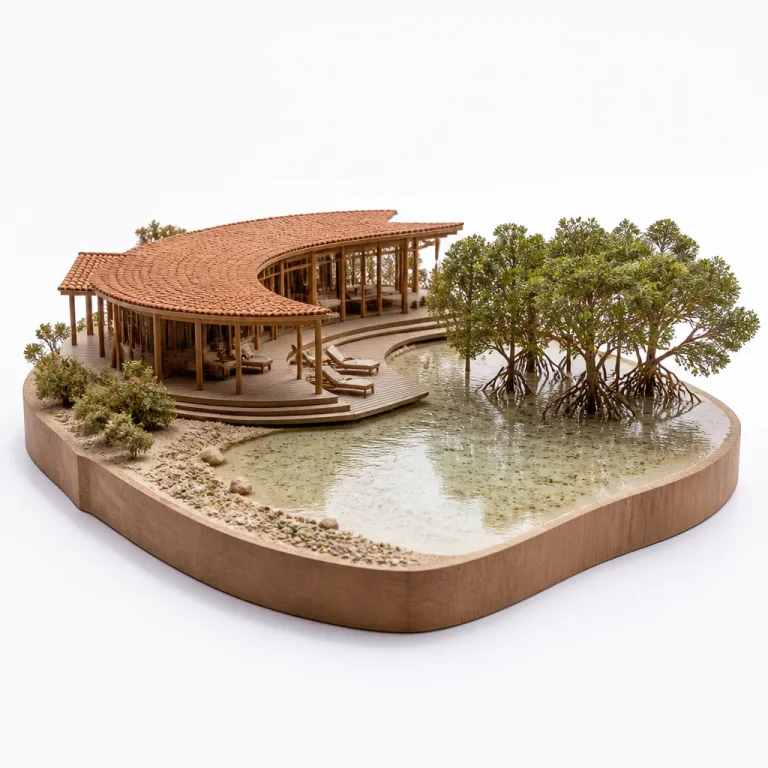
At the centre of Six Senses Amaala Red Sea sits a mangrove lagoon, threaded with a boardwalk and framed by the Earth Lab programme. Rather than a piece of greenwashing set dressing, this is designed as a working landscape where guests join Junior Mangrove Ecologist sessions, learn how the trees protect the bay, and see how conservation can sit inside high-end hospitality. For couples used to staying in places where sustainability is a line on a website rather than a lived experience, the ability to walk from room to lagoon and watch children engage with real data on coastal ecology can be a deciding factor.
The 25 branded residences at this Amaala resort are equally revealing, signalling Red Sea Global’s confidence that people will not only visit but return and stay for longer stretches. These residences, separate from the main hotel yet fully serviced, are aimed at buyers who might split their time between Saudi Arabia, Dubai, and Europe, using Triple Bay as a wellness base in the same way some use Douro Valley estates or Palm Jumeirah apartments. For the wider Red Sea project, the mix of rooms, villas, and residences shows a move beyond short-stay tourism towards a more residential model of luxury travel.
Context matters here, because Six Senses Amaala Red Sea is only the second Six Senses on this coast after Southern Dunes, and it arrives within a Triple Bay plan that calls for more than 1,600 rooms across nine resorts. As Saudi Arabia pushes to reposition itself as a high-value destination, the combination of a serious Longevity Centre, a functioning mangrove lagoon, and a clear long-stay residences strategy suggests a more thoughtful approach than a simple line-up of new resort hotels. For travellers tracking emerging places where hospitality feels hyper-local without costume, the way this resort handles an Arabian sense of place, from dunes and red backdrops to the calm of the bay, will determine whether it joins the small group of properties that, as explored in this piece on hyper-local hotels in Mallorca, genuinely change how and why adults and children choose a sea-facing escape.