From Meiji era prison to Hoshinoya Nara Prison hotel
The former Nara Prison in Nara, Japan has reopened as Hoshinoya Nara Prison hotel, a 48-suite luxury retreat created within one of the last great prisons of the Meiji era. The original red brick architecture, attributed to architect Keijiro Yamashita and laid out in a radial Haviland System plan, once organised five cell blocks around a central watchtower and now frames a calm resort campus of lawns, courtyards and a discreet main lounge. For travellers weighing whether to sleep inside walls that once defined prison life, the project poses a clear question about how far hospitality can go when it inhabits a cultural property with a difficult past.
Hoshino Resorts, the developer behind Hoshinoya Nara Prison hotel, has kept the exterior building almost entirely intact, preserving the red brick walls, arched windows and ironwork that made Nara Prison one of the most recognisable correctional facilities Meiji architects ever produced. Inside, Azuma Architect & Associates has merged nine to eleven former cell units into each suite, so a single suite category such as the 9 Cell, 10 Cell or 11 Cell Deluxe now stretches across what were once narrow cells, with traces of the original cell doors and brick walls left visible as quiet reminders of time. This 48-suite model, rather than a taller new-build tower, limits impact on the cultural property and lets the historic architecture breathe, which matters if you care about how a luxury hotel treats heritage.
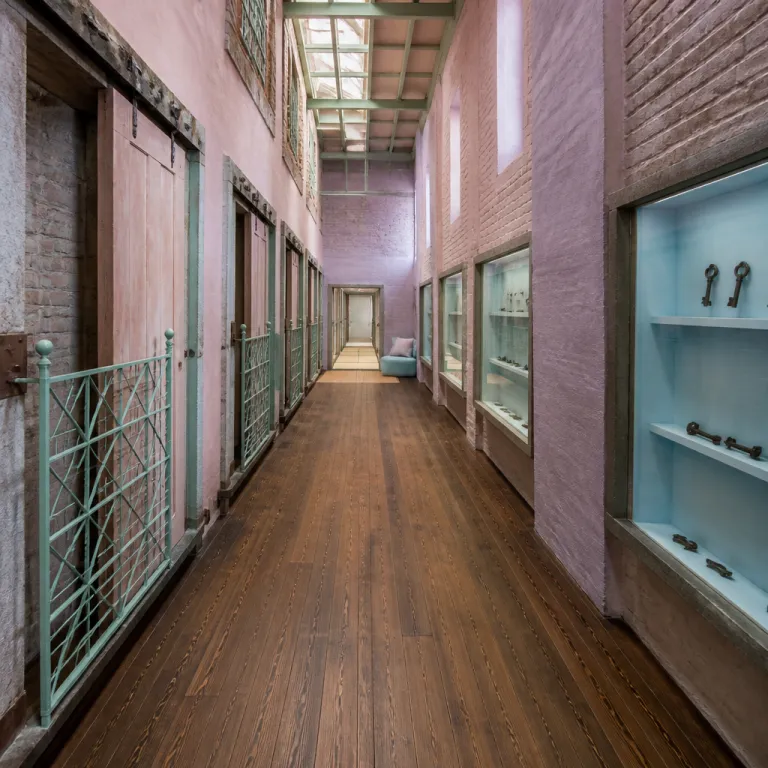
The ethical calculus is most evident in how the design handles the former cell blocks and circulation corridors, which once controlled prison life and now guide guests between the main lounge, the restaurant and the Nara Prison Museum. Public areas retain long sightlines and the rhythm of the original cell doors, but lighting by ICE Urban Environmental Lighting Institute softens the atmosphere and turns the inside walls into a canvas for art and shadow rather than surveillance. For solo travellers, the result is a heritage hotel in Nara where you are always aware that you are inside a former prison building, yet the architecture, landscape work by Hiroki Hasegawa and the measured service style of Hoshino Resorts keep the experience firmly in the realm of reflective comfort rather than dark tourism.

Inside the suites, cell blocks and museum corridor
Step inside a Hoshinoya Nara Prison suite and the first impression is space, because each room fuses multiple former cell volumes into one elongated plan that still hints at the original grid. Tatami, timber and soft textiles run along the old brick walls, while high arched ceilings and carefully placed art pieces draw the eye away from the memory of individual cell doors and towards a more meditative reading of the architecture. The design by Azuma Architect & Associates uses the thickness of the brick to create deep window reveals and alcoves, so the suite layout feels cocooned without ever feeling claustrophobic.
In the 9 Cell, 10 Cell and 11 Cell Deluxe categories, you can trace where one cell ended and another began, yet the joinery, lighting and furniture by Hoshino Resorts smooth those transitions into a single narrative of time passing from prison to hotel. Bathrooms sit where service spaces once were, and the main lounge for each wing occupies what used to be administrative areas, so the building’s hierarchy has been inverted in favour of guest comfort while still respecting the cultural property status of Nara Prison. As one Hoshino Resorts representative notes in launch material, the aim is to create “a stay that acknowledges the gravity of the site while offering calm, restorative time inside its walls,” a stance that places this adaptive reuse hotel in dialogue with other heritage conversions.
The museum corridor is the other half of the equation, because the on-site prison museum does not let guests forget what this building once enforced. A dedicated pathway reserved for hotel guests links the main lounge to the Nara Prison Museum, where exhibits explain how prisons Meiji officials commissioned, including this one, formed a network of great prisons that modernised Japan’s penal system. Here, the narrative is explicit rather than implied, and the prison museum uses original documents, artefacts and restored cells to show prison life as it was, which balances the luxury hotel experience and makes a stay at Hoshinoya Nara Prison hotel feel more like a dialogue with history than a themed escape.

Pricing, positioning and the wider adaptive reuse trend
Indicative rates at Hoshinoya Nara Prison hotel start from about ¥147,000 per night for one of the 48 suites, according to pricing published by Hoshino Resorts, placing this luxury hotel firmly in the upper tier of Japan’s heritage-led properties. That price buys more than a striking room inside a former prison, because guests also gain extended access to the Nara Prison Museum, a calm main lounge, landscaped grounds across roughly 25 acres and a tightly run service operation by Hoshino Resorts that understands how to balance discretion and narrative. For solo travellers used to comparing city hotels near major venues, such as the properties highlighted in a guide to top hotels near Radius Chicago, the value here lies less in location convenience and more in depth of experience.
Within the suite categories, the Gastronomy Chronicle dinner menu anchors the culinary programme, turning the red brick setting into a stage for seasonal Nara produce and quietly theatrical plating that nods to both art and architecture. Public spaces such as the main lounge and corridors keep the original brick walls exposed, while new inside walls in timber and plaster soften acoustics and create more intimate pockets for reading or tea, so the building never feels like a museum piece even as it functions partly as a prison museum. Hoshino Resorts publishes a clear privacy policy and terms and conditions for the property, which matters when you are booking directly with Hoshino Resorts online and sharing personal data for a stay that is as much about reflection as it is about comfort.
Hoshinoya Nara Prison hotel opened in late June as part of a broader wave of adaptive reuse projects, from former cinemas in Europe to industrial sites on the Red Sea, with the opening date and design team confirmed in Hoshino Resorts press material and architect statements. In Nara, Japan, the decision to keep the original red brick building, maintain the radial layout and limit the project to 48 suites signals that Hoshino Resorts sees this not just as another hotel in Nara but as a long-term cultural investment. For travellers deciding whether to book, the question is simple yet weighty, because choosing Hoshinoya Nara Prison hotel means accepting the tension between past and present and trusting that this particular conversion of a Meiji era prison into a hotel has done enough to honour the people whose lives once unfolded behind these brick walls.
Key facts and practical notes for booking
What is Hoshinoya Nara Prison? A luxury hotel converted from the 1908 Nara Prison, a designated cultural property, as documented by Hoshino Resorts and local heritage authorities. When did Hoshinoya Nara Prison open? June 25, 2026, according to information published by Hoshino Resorts. How many suites does Hoshinoya Nara Prison have? 48 suites.
Is there a museum at Hoshinoya Nara Prison? Yes, there is an on-site museum corridor and dedicated Nara Prison Museum. Where is Hoshinoya Nara Prison located? 18 Hannyajicho, Nara, Japan. Book in advance due to limited suites, explore the on-site museum corridor and plan time for nearby Nara Park and Todai-ji Temple to round out a heritage-focused stay in Nara.
Legal and policy information
Hoshino Resorts provides a detailed privacy policy for Hoshinoya Nara Prison hotel, outlining how guest data is collected, stored and used before, during and after a stay. Guests should review the privacy and terms sections on the official Hoshino Resorts website when booking, especially if they are using online prepayment or sharing passport information in advance. As with other Hoshino Resorts properties in Japan, the combination of clear policy language and transparent contact details supports trust, which is essential when a hotel operates inside a protected cultural property such as the former Nara Prison.