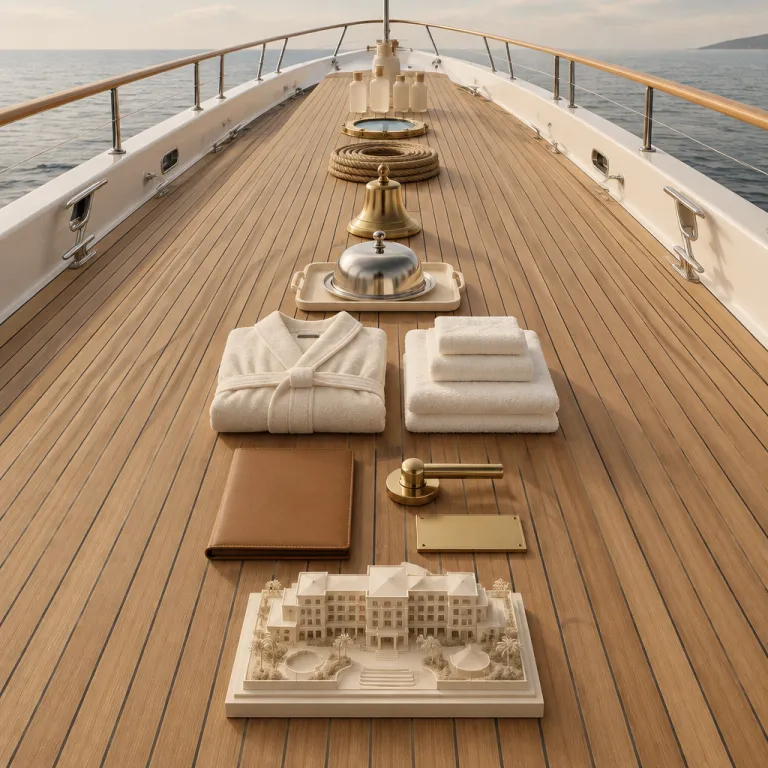
From flagship resorts to a luxury hotel yacht at sea
When a storied hotel brand launches a luxury hotel yacht at sea, it is not selling cabins, it is exporting its soul. The promise is clear for couples used to staying at top hotels resorts on land ; the same service, the same design language, the same emotional temperature, only now the view changes every morning. The risk is equally clear, because a moving destination can dilute the sense of place that made the original resort unforgettable.
The Ritz Carlton Yacht Collection is the most visible test case, translating the ritz carlton playbook of polished service and quiet wealth into a fleet of intimate yachts. Onboard the Evrima, and on the forthcoming Ilma and Luminara, the brand leans hard on spacious suites, suite dining and a wellness program that mirrors its flagship resorts, while the sea itself becomes the lobby artwork. Couples who know a classic ritz or carlton city property will recognize the restrained palette, the floor to ceiling windows and the choreography of staff who appear just before you think to ask.
Four Seasons Yachts takes a similar path, positioning its first yacht as a floating extension of Four Seasons resorts rather than a cruise ship. With only 95 suites and a guest count closer to a small hotel than a liner, the yacht collection focuses on residential scale, private terraces and ceiling windows that frame the sea like a gallery wall. For a couple used to a Four Seasons suite on land, the journey from penthouse to yacht suite feels less like a change of category and more like a change of horizon.
What transfers cleanly from land to sea is the service culture that underpins every memorable stay. A well trained équipe can move from ritz carlton resorts to a carlton yacht and still anticipate how you take your coffee, how you like your pillows and how much privacy you want at breakfast. The best of these yachts sail with teams that treat each voyage as a sequence of micro stays, resetting expectations daily as the destination shifts from one harbor to the next.
Design language also travels well, especially for couples who choose hotels resorts precisely because they feel like a coherent world. Onboard luminara suites and the planned Ilma Luminara accommodations, the same designers who shaped land based resorts use natural woods, soft textiles and generous floor ceiling glass to keep the sea ever present but never overwhelming. The result is an experience that feels like a familiar brand universe, only now the coastline outside your suites evolves with every sunset.
What does not transfer as easily is the deep sense of locality that defines the best resorts. A ritz property in Kyoto or a Four Seasons in Mexico can hard wire local artisans, ingredients and rituals into every suite dining menu and spa treatment, while a yacht must balance that ambition with the logistics of moving every night. Couples expecting the same immersion they felt at a rooted destination may find that the sea explore narrative, however romantic, sometimes smooths away the rough edges that made the original place so compelling.
Space, privacy and the new arms race at sea
The most striking promise of any luxury hotel yacht at sea is space per guest, a metric that has quietly become the new status currency. Where mainstream cruises chase volume, hotel branded yachts chase ratios, carving fewer suites into larger footprints and marketing spacious suites as the ultimate proof of seriousness. For couples used to high end resorts, this matters, because privacy and silence are the first luxuries to vanish when a ship feels crowded.
On the Ritz Carlton Yacht Collection, the smallest suite already feels closer to a junior suite in a city hotel than a standard cabin, and the top categories rival penthouses at flagship resorts. Floor to ceiling windows and wide balconies turn the sea into a moving mural, while suite dining allows couples to treat their room as a private restaurant when they want to retreat from the social theatre onboard. The carlton yacht design team clearly understands that romance at sea is less about chandeliers and more about the ability to close the door and hear only the water.
Four Seasons Yachts pushes the same argument, using its yacht collection to position each suite as a villa at sea rather than a room. With only 222 guests and 95 suites, the space per passenger rivals many land based luxury resorts, and the layout encourages couples to explore quiet corners rather than queue for loungers. For travelers who have stayed at remote properties like Amanvari in Baja California Sur, where each casita feels like its own world, this Aman style resort experience offers a useful benchmark for judging whether a yacht really delivers equivalent breathing room.
Orient Express, with its Corinthian sailing yacht, takes a different tack, leaning into the romance of classic voyages rather than raw square meters. Here, the inspiration comes from rail suites and grand hotels, with ceiling windows and polished wood creating a cocoon that feels more like a historic carriage than a contemporary resort. Couples who value narrative and nostalgia over sheer size may find that this style of journey, with its curated voyages and literary references, feels more intimate than the largest luminara suites.
Space also shapes how wellness is delivered onboard, which matters for couples who treat spa time as a central part of any trip. A dedicated wellness deck, hydrotherapy pools and quiet treatment rooms with sea view windows can rival the best resorts, but only if the design keeps traffic patterns discreet and sound levels low. When yachts sail with too many guests for their footprint, even the most beautiful spa can feel like a corridor, undermining the very calm it is meant to sell.
For you as a potential guest, the practical question is simple but revealing. When you look at deck plans and marketing images, ask whether the spacious suites and public areas seem designed for actual use, or merely for brochure photography, and whether the ratio of guests to square meters matches what you expect from your favorite land based hotels resorts. A true luxury hotel yacht at sea should feel, from embarkation to disembarkation, like a property where the second visit would still feel uncrowded, even after the novelty of the first voyage has faded.
Sense of place when the destination never stands still
What makes a great resort linger in memory is rarely just the room ; it is the way the property frames its destination so that every view, every scent and every sound feels unmistakably of that place. A luxury hotel yacht at sea complicates this, because the destination becomes a sequence of ports rather than a single rooted landscape, and the temptation is to smooth everything into a generic Mediterranean or Caribbean mood board. Couples who care about authenticity quickly sense when a voyage has been curated for Instagram rather than for genuine cultural depth.
The best hotel branded yachts fight this flattening by treating each itinerary as a series of mini residencies rather than a checklist of stops. Onboard guides, often recruited from the same talent pool as high end expedition yachts, lead small group excursions that go beyond standard shore tours, while suite dining menus shift subtly with each port to reflect local markets and fishing seasons. When this works, the sea explore narrative becomes a strength, allowing couples to experience multiple micro destinations in one journey without losing the thread of place.
Ritz Carlton’s approach in regions like Alaska and the Mediterranean shows both the potential and the limits of this model. The yacht collection can bring guests close to glaciers or small islands that large ships cannot reach, and the view from a private balcony at dawn can rival any land based panorama, yet the onboard culture still feels anchored in the global ritz carlton aesthetic rather than in local vernacular. For some couples, that continuity is comforting, while for others it risks turning wildly different destinations into variations on the same polished theme.
By contrast, properties like The Slate in Phuket, which evolved from the Indigo Pearl hotel into an industrial chic beach resort, demonstrate how deeply a design can root itself in local history and materials. When you read about this industrial chic beach resort in Thailand, you see how mining heritage, local artisans and regional cuisine shape every corner of the property, something that is harder to replicate when yachts sail through multiple countries in a single week. The question for couples is whether they want one intense immersion or a curated series of lighter touches, each framed by the constancy of the sea.
Orient Express’s Corinthian and the forthcoming Aman sea projects hint at a third path, where the yacht itself becomes the primary destination and the ports act as supporting characters. Here, the experience is less about ticking off cities and more about the slow voyage, the rhythm of days onboard and the evolving relationship with the sea as both stage and soundtrack. For romantically inclined travelers, this can feel closer to staying at a remote island resort, where the outside world recedes and the property’s own mythology takes over.
Still, the moving nature of these voyages complicates the return visit test that serious travelers use to judge any hotel. You can return to the same ritz resort in Paris and know that the lobby scent, the suite layout and the neighborhood cafés will greet you like old friends, but a yacht’s itinerary, seasons and even its onboard team may shift between voyages. When you book a second journey, you are not just returning to a property, you are gambling on a moving target, and that makes loyalty feel more like an ongoing experiment than a settled habit.
Romance, reality and whether this is a hotel, a cruise or something else
For couples, the emotional pull of a luxury hotel yacht at sea is obvious, because few settings feel as inherently romantic as a private balcony at dusk with nothing but water on the horizon. The idea of a carlton yacht or a Four Seasons vessel suggests a familiar level of care wrapped in the drama of the open sea, a combination that can turn even a short journey into a milestone celebration. Yet romance alone does not answer the harder question of what, exactly, you are booking.
These ships are not traditional cruises, with their scale, entertainment focus and anonymous cabins, yet they are not conventional resorts either, because the ground literally moves beneath you and the destination changes overnight. In practice, the best of them function as a third category, where yachts become small floating resorts and voyages replace stays, and where the experience is defined as much by the rhythm of embarkation and disembarkation as by the time spent onboard. Couples who understand this hybrid nature tend to enjoy it more, because they do not expect a perfect replica of their favorite land based suite.
Within this third category, details matter disproportionately. Luminara suites and the Ilma Luminara accommodations, for example, are being positioned as benchmarks for how ceiling windows, private terraces and integrated wellness spaces can make a yacht feel like a high end coastal resort, while the naming of ships like Evrima Ilma signals an attempt to build a family of floating properties with distinct personalities. When yachts sail under a hotel flag, every corridor, every restaurant and every spa treatment becomes a test of whether the brand’s core values have survived the crossing from land to sea.
Practical considerations should sit alongside the poetry when you decide whether to find voyage options on these ships for your next anniversary or honeymoon. Look closely at how many suites there are, how many restaurants, how wellness is structured and whether suite dining is treated as a serious option or an afterthought, then compare that to what you expect from your preferred hotels resorts on land. Resources like this guide to choosing a refined yet budget conscious hotel near DFW can sharpen your instincts for reading between the lines of marketing language, even when the price point and setting are very different.
In the end, the most honest verdict is that a luxury hotel yacht at sea owes its parent brand more than just a logo and a familiar font. It owes the rigor of service that makes a ritz lobby feel effortless, the design intelligence that lets a Four Seasons suite breathe and the narrative depth that turns an Orient Express voyage into a story rather than a route map. When those elements align, couples stepping onboard are not simply boarding yachts, they are entering a moving chapter of a hotel they already trust, and that is when the experiment stops feeling like a gamble and starts feeling like the future of high end travel.
Key figures shaping hotel branded yachts at sea
- Four Seasons Yachts launched its first vessel with 222 guests and 95 suites, a guest to suite ratio that mirrors many small luxury resorts and signals a focus on space per traveler rather than volume (data reported by The Hollywood Reporter, based on company announcements).
- Orient Express’s Corinthian sailing yacht is planned with 54 suites, placing it firmly in the ultra low density segment where privacy and personalized service can approach the standards of intimate land based properties (figures from Accor and Orient Express project communications).
- The Ritz Carlton Yacht Collection’s initial ships, including Evrima, operate with guest capacities in the hundreds rather than the thousands, positioning them closer to large hotels than to mainstream cruise ships and enabling a higher staff to guest ratio (capacity data from Ritz Carlton Yacht Collection public specifications).
- Industry analysts tracking luxury small ship orders have noted a steady increase in average space per guest over the past decade, with some new builds offering more than 70 square meters per passenger when public areas are included, a level that rivals many urban suites in top tier hotels (aggregated from cruise industry reports and shipyard disclosures).